


Trump Says U.S. Could Sustain Iran Assault for Weeks as He Floats Conflicting Postwar Scenarios
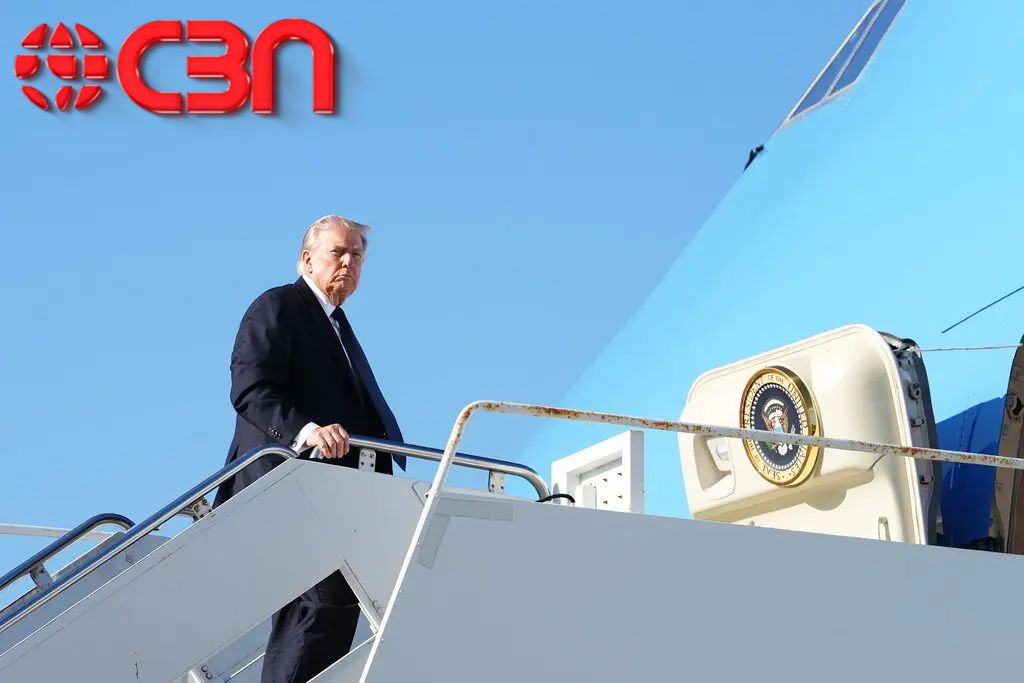
President Trump told The New York Times today that the United States intends to sustain its assault on Iran for “four to five weeks” if necessary, saying it “won’t be difficult” for U.S. and Israeli forces to maintain the pace even as he warned more American casualties are likely
In a roughly six minute phone interview from Mar a Lago, about 36 hours into the conflict and shortly after learning of U.S. casualties, Trump said he was about to meet with “the generals.” Citing Pentagon projections, he acknowledged the US military death toll could rise. “Three is three too many as far as I’m concerned,” he said. “If you look at projections, they do projections, it, you know, it could be quite a bit higher than that. We expect casualties.”
He said the Pentagon has ample forces, missiles and bombs to continue the campaign “if we have to,” with ammunition stored “all over the world in different countries.”
Trump offered shifting visions for Iran’s political future after the targeted killing of Ayatollah Ali Khamenei, who ruled for more than three decades before being killed in a Saturday airstrike. At one point, he said he had “three very good choices” to lead Iran but would not name them.
He suggested Iran’s elite forces, including officers in the Islamic Revolutionary Guard Corps, could surrender their weapons to the public, saying, “They would really surrender to the people, if you think about it,” referring to the very same forces, including the Basij militia, who opened fire on protesters in January, killing thousands.
He repeatedly cited what he called a successful model in Venezuela after ordering a Delta Force team to seize Nicolás Maduro, saying, “What we did in Venezuela, I think, is the perfect scenario,” and noting that “everybody’s kept their job except for two people.” He has raised Venezuela in recent weeks as a template for identifying leadership more cooperative with Washington, despite advisers warning that Iran’s extensive military capabilities, active nuclear program, deep social divisions and cultural and historical differences make it virtually impossible to replicate the approach used in Venezuela, where the existing government stayed in place after agreeing to take direction from Washington.
At other moments, Trump described a different outcome in which Iranians would overthrow their government themselves. “That’s going to be up to them about whether or not they do,” he said. “They’ve been talking about it for years so now they’ll obviously have an opportunity,” a scenario that would contradict the Venezuela model he had just praised.
Earlier today, Iran’s top national security official, Ali Larijani, said an interim committee would run the country until a successor to the supreme leader is chosen. Larijani oversaw nuclear negotiations with the United States that later collapsed and was sanctioned by the Trump administration in January for his role in a crackdown on anti government protesters. Trump did not say whether he believed Larijani could lead Iran.
He also said Arab states in the Persian Gulf were not needed to join the strikes, despite retaliatory missile and drone attacks by Tehran against them and Israel.
U.S. and Israeli forces have killed several Iranian military leaders, creating a power vacuum Tehran is trying to fill, and Trump said the strikes have “knocked out a big portion” of Iran’s navy, including nine ships and its headquarters.
He said he would consider lifting sanctions if new leadership proves pragmatic, but declined to say how or whether the United States would defend Iranians if they try to overthrow the government. “I don’t make a commitment one way or the other; it’s too early,” he said. “We have work to do and we’ve done it very well. I’d say we’re quite ahead of schedule.”
Link to CBN Unfiltered👇🏻 https://chat.whatsapp.com/GFjg1uTPgNdHQrEAXUF4pk